Enfield House Clearance: Recycling and Sustainability Commitment
 Enfield House Clearance is committed to an eco-friendly waste disposal approach that treats every clearance as an opportunity to maximise reuse, recycling and low-carbon transport. Our sustainable house clearance services focus on reducing landfill, extending the life of household items and supporting the circular economy across the borough and neighbouring North London areas. This page outlines our targets, the practical steps we take, and how partnerships and local facilities help us deliver responsible rubbish clearance.
We set a clear recycling percentage target for every job: our company-wide goal is to divert at least 85% of material from landfill through reuse, recycling and material recovery. That 85% recycling target applies to furniture, appliances, textiles and general household waste where separation and processing allow. To achieve this, we use a layered approach of assessment, segregation and routing to the right facilities — keeping recyclable streams clean and usable for reprocessors.
Local Transfer Stations and Eco Hubs
We make regular use of local transfer stations and recycling centres to ensure materials are processed correctly. This includes working with facilities such as Edmonton EcoPark and nearby North London transfer hubs, which specialise in moving separated materials into the appropriate recovery streams. By routing different waste fractions to the right transfer stations we support a localised, efficient waste chain that reduces transport miles and contamination rates.Partnerships with Charities and Reuse Organisations
A cornerstone of our sustainable rubbish area work is prioritising reuse. Wherever items are suitable, we donate working furniture, clothing and white goods to charities and social enterprises. We actively collaborate with national and local organisations including British Heart Foundation-style reuse programmes and community reuse centres, plus local charity shops and refurbishment projects. These partnerships help redistribute usable items and support local people in need, rather than sending serviceable goods to material recovery processes prematurely.Our partnerships include logistics coordination for large donations, selective refurbishment for resale through charity shops, and cooperation with groups specialising in furniture repair and redistribution. Enfield recycling and sustainability therefore does not stop at collection — it extends into enabling trusted charities and social enterprises to reclaim value and function from items collected on-site.
Practical Recycling Activities We Carry Out
We separate loads into clear streams with trained crews and marked containment: metals, wood and timber, electricals (WEEE), textiles, foam and upholstery, inert rubble, and mixed recyclables. Typical activity includes:- Furniture reuse and upcycling — recovering sofas, tables and wardrobes that are suitable for donation or refurbishment.
- WEEE processing — safe removal and routing of fridges, cookers, TVs and small appliances to registered WEEE facilities.
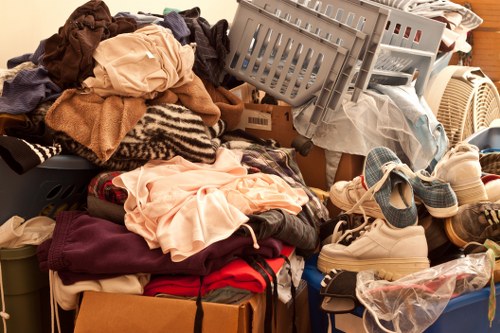
- Textile sorting — separating wearable clothes from rags and recycling fibres accordingly.
- Hazardous items — isolating paints, oils and batteries for specialist treatment.
- Green waste composting — routing garden waste to composting and mulching services where available.
Low-Carbon Fleet and Route Optimisation
To lower emissions during removals and transfers, we invest in a low-carbon fleet consisting of electric vans, plug-in hybrids and fuel-efficient LCVs. Our routing software optimises journeys to minimise mileage and consolidate collections when possible. Using low-emission vehicles and efficient scheduling reduces our carbon footprint and is an essential part of delivering sustainable house clearance in Enfield and across nearby boroughs.Drivers are trained in eco-driving techniques and load planning so that each trip carries maximum payload with minimal wasted travel. Where EV charging infrastructure is available, our electric vans operate daily to and from transfer stations and charity partners, supporting our ambition to keep the carbon intensity of clearances low.
Compliance, Reporting and Continuous Improvement
We keep transparent records of material flows and recycling rates for every clearance. Regular internal audits and external reporting enable us to measure progress toward our 85% diversion goal and set incremental improvements. Data from collections helps us identify items that are commonly reusable, adjust pricing and logistics to favour reuse over disposal, and refine partnerships with reprocessors and charities.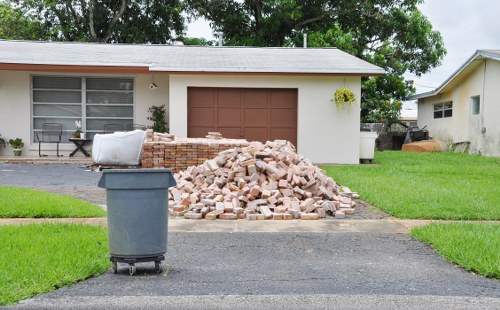
Sustainable Rubbish Area Management and Community Benefits
In creating a sustainable rubbish area for each job we prioritise the highest-value outcome for materials: reuse first, recycling second, energy recovery third and landfill only as a last resort. This hierarchy respects material value and the environment, contributes to local circular economies and supports community groups that benefit from donated goods. Enfield house clearance recycling therefore combines operational rigour with community-focused principles.Our commitment is to maintain a resilient, low-impact service: targeting high recycling rates, using low-carbon vans, working with local transfer stations and charities, and aligning on-site sorting with borough approaches to waste separation. By choosing services that prioritise sustainability you help reduce waste, lower carbon emissions and keep usable goods in circulation.
We continue to evolve our sustainable rubbish practices through partnerships, fleet upgrades, and better materials intelligence. Together with residents and community organisations across Enfield and neighbouring areas, we aim to make house clearance a positive environmental action, not simply a task to dispose of items. Our approach to eco-friendly waste disposal and sustainable rubbish management demonstrates how a professional clearance service can support local circular economies and cleaner neighbourhoods.